Overthinking & self-confidence
- Perfectionism
- Imposter syndrome
- Self-doubt
- Procrastination
- Fear of failure
- Difficulty making decisions
- Body image concerns
Telehealth in 40+ states through PSYPACT.
Virtual therapy for high-achievers
Practical, evidence-based therapy for people who are ready to feel more like themselves again.


Welcome — I'm glad you're here
Hi, I'm Chelsea, and I'm a clinical psychologist who works with high-achievers, overthinkers, and people who are used to being the dependable one. If you're always making room for everyone else, there's room for you here, too.
Imagine being able to trust your decisions without having to ask three other people first. What would it feel like to be able to set a boundary without the guilt spiral or enjoy a win without immediately moving the goalposts? Maybe it would just be nice to have some energy left for yourself sometimes. That's the kind of breathing room you deserve to have in this life you're working so hard to build.

Sound familiar?
On the outside, you're doing all the things. On the inside, your brain never clocks out, and it can be exhausting.
Common reasons people reach out
If you're nodding along, you're in the right place.
Start with a free consultationWhat we're really working toward
Therapy isn't only about feeling less anxious or less stuck. It's also about building enough confidence and flexibility that everyday life starts to feel more like yours again.
Therapy can make a difference
Where I practice
I'm licensed in Florida, New York, and Wisconsin, but I provide psychotherapy via telehealth in over 40 states.
Meet Dr. Chelsea
The pressure to please everyone while performing 'perfectly' can be exhausting. I totally understand that, I'm here to help.
On a personal note
I was born and raised in the very chilly state of Wisconsin, and I'm proud to be a UW‑Madison alum. (Go Badgers!) After college, I moved to Chicago, where I earned my master's degree and PhD in Clinical Psychology.
I moved around a bit after grad school before landing in Florida a handful of years ago. Having friends and family sprinkled all over the country gives me a great excuse to travel.
A few fun facts
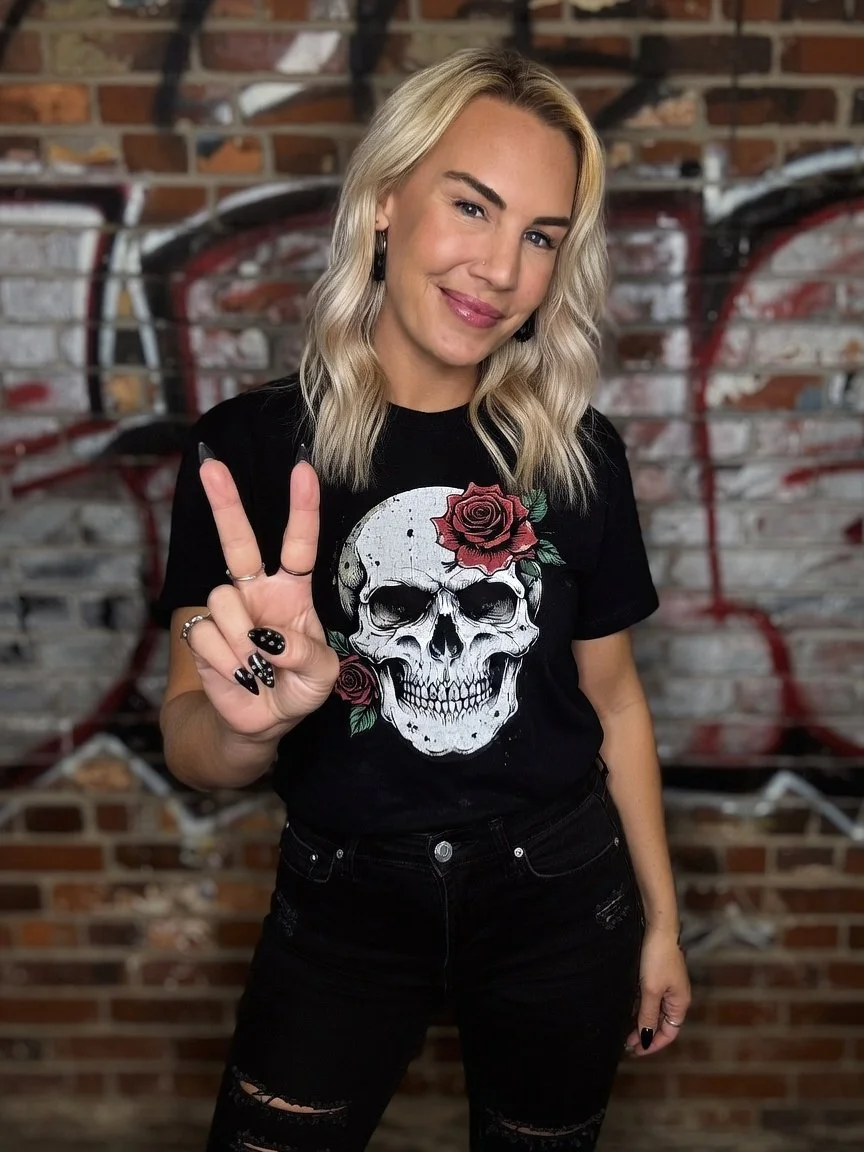
On a more professional note
I earned my PhD in Clinical Psychology in 2015 and have over 14 years of experience providing psychotherapy. I've completed extensive training in evidence-based psychotherapies, including CPT and PE, two of the “gold standard” treatments for PTSD and trauma-related symptoms.
I currently serve as a national trainer and consultant for two CBT-based training programs, leading trainings and providing consultation for other licensed clinicians learning to deliver those specialized treatments.
I've supervised predoctoral psychology interns and practicum students during their clinical rotations, and I've led trainings for large agencies on topics including suicide prevention, substance use disorders, and treatments for individuals with serious mental illness.
View a list of my research articles in peer-reviewed journals here.

Let's talk about therapy
Therapy shouldn't feel cold or stiff. It's a place where you should feel understood, get honest feedback, and learn practical tools you can actually use in your life.
My approach to therapy
You don't need to show up polished or have the perfect words. I want therapy to feel warm, approachable, and real — a place where you can talk honestly, laugh sometimes, and know you won't be judged.
I'll listen and validate, but I'll also do a little more than just nod along. I'll offer my genuine observations, help you notice patterns that may be keeping you stuck, and encourage small experiments that stretch you a tiny bit outside of your comfort zone.
I love CBT because it gives you practical tools you can use in real life. The goal isn't for you to need therapy forever — it's to help you trust your own decisions, handle hard moments with more confidence, and build a set of tools you can carry with you. Basically, becoming your own little “pocket therapist” when life gets messy.
No obligation. No judgment. Just a simple first step.

Common reasons people reach out
Sometimes there are clear symptoms. Sometimes it's just realizing you're exhausted from second-guessing yourself, people-pleasing, or trying to hold everything together all the time.
What we work toward
Spend less time replaying conversations, questioning your decisions, and preparing for every possible outcome.
Build confidence in your decisions without needing constant reassurance that you're doing everything “right.”
Set healthier boundaries, recognize your own needs, and stop treating rest like something you have to earn.
Types of therapy
These are the approaches I provide and have specialized training in. “Evidence-based” simply means they've been studied and shown to help with the concerns they're designed to treat. After we get a fuller picture of what's going on, we'll decide together which strategies make the most sense for your goals, your needs, and you.
CBT examines the connection between your thoughts, emotions, and behaviors. It can help you recognize patterns that contribute to anxiety, self-doubt, perfectionism, depression, and burnout.
Treatment focuses on practical strategies that help you recognize and challenge unhelpful beliefs, and respond more effectively in stressful situations with greater confidence and clarity.
DBT provides practical tools for managing intense emotions, navigating difficult situations more effectively, and improving communication within your relationships.
Strategies may include mindfulness, emotion regulation, distress tolerance, and interpersonal effectiveness — skills that help you respond thoughtfully instead of feeling controlled by the emotion of the moment.
CPT is a trauma-focused type of cognitive behavioral therapy, and one of the gold standard treatments for PTSD and other trauma-related symptoms.
It helps you identify and examine ‘stuck points’ — rigid, unhelpful, and often inaccurate beliefs that can interfere with healing after a traumatic event.
PE is an evidence-based treatment for PTSD and trauma-related symptoms. Trauma can lead people to avoid memories, emotions, situations, or activities that feel connected to what happened.
Through a carefully paced, collaborative process, PE reduces avoidance and allows you to safely process traumatic experiences so they have less control over your present life.
Mindfulness-based interventions help you develop greater awareness of your thoughts, emotions, and physical responses without immediately judging or reacting to them.
These strategies can reduce rumination, improve emotional regulation, and help you stay grounded when anxiety or your inner critic begins taking over.
MI is a collaborative, nonjudgmental approach for when part of you wants to make a change while another part feels uncertain, hesitant, or overwhelmed.
The process helps you clarify what matters most, explore barriers to change, and strengthen your confidence in taking meaningful next steps.
CBCT addresses the ways trauma and PTSD can affect a couple's relationship, communication, trust, and emotional connection.
Treatment helps couples improve communication, reduce avoidance, strengthen mutual support, and work together toward recovery. Suitability is determined through consultation and assessment.
Not sure which is the best fit? No problem.That's what the consultation is for.
Contact me to learn moreWhat to expect
You don't need to have the perfect explanation, a neatly organized story, or every goal figured out before you start. Here's what getting started usually looks like.
You don't need to know exactly what to say. We'll talk briefly about what brings you in, what you're hoping might change, and any practical questions about scheduling, fees, or fit. If it sounds like a good match, we'll schedule your first full appointment.
Your first session is a 60-minute intake assessment. We'll talk about what's been going on, what's working, what's not, relevant history, and what you'd like therapy to help with. It's a conversation — not a test — and you can share at your own pace.
I'll recommend an evidence-based approach based on your concerns and goals. I typically prefer weekly sessions when we're first getting started so we can build momentum and a strong working relationship. You should understand what we're working on and why, and we'll adjust the plan together as needed.
As things improve and you feel more comfortable applying new skills outside of sessions, we can space appointments out. Some clients move to every other week or occasional check-ins. There isn't a preset finish line — we'll keep adjusting the frequency to fit your needs, progress, and schedule.
Services & fees
Clear pricing. No surprises. If your plan includes out-of-network benefits, you may be eligible for partial reimbursement.
Please give at least 24 hours' notice to cancel or reschedule — by email, text, or via the client portal. Cancellations within 24 hours will be charged the full session fee.
I'm in-network with Aetna in Florida, New York, and Wisconsin. I'm considered out-of-network for all other plans but can provide a superbill that you can submit for possible reimbursement.
Insurance & payment
Payments are collected through Ivy Pay, a HIPAA-compliant payment app that accepts major credit and debit cards as well as HSA and FSA cards. Find out if your insurance plan can help.
If you have Aetna
I'm an in-network provider for Aetna clients who reside in Florida, New York, or Wisconsin. If that applies to you, I can help you get more specific information about your coverage.
If it doesn't apply, there are still options worth exploring — see out-of-network reimbursement below.

For all other insurance companies
I'm considered an out-of-network provider for all other insurance companies, so you would be responsible to pay the full session fee at the time of each session.
However, if your plan has out-of-network benefits, you may be eligible for at least partial reimbursement. I would provide you with a monthly invoice — a superbill — that you can submit to your insurer as part of a claim.
APA: Mental health coverage & out-of-network reimbursement →

Understanding your coverage
Start here. If the answer is no, ask about a plan exception or prior authorization instead (question 3).
All of my sessions are delivered via telehealth, so this one matters.
This is how you ask for a specialty-trained therapist to be partially covered under your plan.
Ask for the customary reimbursement rate for these CPT codes:
90837 — 55-minute psychotherapy session
90834 — 45-minute psychotherapy session
90791 — 60-minute psychodiagnostic assessment / initial intake
Worth knowing early so you can plan the course of treatment.
Ask what's specifically required — NPI number, diagnosis, proof of payment. I provide a superbill directly to you each month.
Timelines vary by insurer, so it helps to set expectations up front.
Payment & benefits
Payments are collected through Ivy Pay, a secure HIPAA-compliant payment app that accepts all major credit and debit cards as well as HSA and FSA cards. Before our first appointment, you'll get a text from Ivy Pay to securely enter your payment details.
Want to know what your out-of-network reimbursement might look like? A benefits check can help you see whether your plan includes out-of-network mental health coverage and what deductible or coinsurance may apply.
Frequently Asked Questions
If you don't see your question answered here, please get in touch, and I'll be happy to answer it directly.
I offer a free 15-minute phone consultation before scheduling a first appointment, so we can both get a sense of whether we're a good fit.
I'm licensed in Florida, New York, and Wisconsin, and I can see clients in over 40 states under the PSYPACT agreement. As long as you reside in a PSYPACT participating state, I can provide therapy via telehealth. See the current list of PSYPACT states.
One note: even though appointments are virtual, you must be physically located in an approved PSYPACT state during session. If you'll be traveling to a non-PSYPACT state, let me know as soon as possible so we can reschedule.
At this time, my practice is fully virtual. Video appointments offer the privacy and flexibility many busy professionals prefer, and sessions are held through a secure, confidential platform.
Virtual therapy also eliminates travel time, which makes it easier to fit therapy into a full schedule — whether you're at home, at the office, or traveling.
Therapy delivered via telehealth has been shown to be just as effective as therapy provided in person, with some added benefits.
That said, telehealth isn't right for every situation. If you are actively or chronically suicidal, you may need more intensive intervention. I also can't see clients experiencing active psychosis, homicidal thoughts, or other issues that may require emergency intervention.
If you are in crisis, call 911 or call or text 988 to reach the Suicide & Crisis Lifeline.
Please give at least 24 hours' notice to cancel or reschedule. You can do this by email, text, or through the online client portal.
Cancellations within 24 hours of the appointment are charged the full session fee.
I primarily use Cognitive Behavioral Therapy (CBT), Dialectical Behavior Therapy (DBT), and mindfulness-based interventions. Each has been scientifically shown to be effective for a wide range of symptoms and problems.
I also specialize in treating trauma-related symptoms including PTSD, which can involve exposure-based interventions that help you safely work through anxiety connected to past traumatic experiences.
It varies. Frequency and overall length depend on what brings you to therapy, the severity of what you're dealing with, how much you're able to practice new skills between sessions, and whether new concerns come up along the way.
I typically prefer weekly sessions when we're getting started. That helps us build a clear picture of your goals, and a collaborative, trusting relationship early on can help you get there faster.
As you get more comfortable using the tools on your own, we can move to every other week. Some clients eventually shift to monthly check-ins to stay accountable, reinforce skills, and troubleshoot challenges. We adjust to fit your needs and schedule.
Book a complimentary phone consultation using the online calendar. After we talk, we can decide on next steps together.
Contact
The fastest way to get started is by scheduling a free 15-minute call. Just choose a time that works for you, and I'll give you a call. Or you can send a request through this form and I'll follow up via email.
Please call 911, or call or text 988 to reach the Suicide & Crisis Lifeline. This form isn't monitored for emergencies.